Zach Lieberman
Code as a medium for drawing, movement and play. With Golan Levin, he forms TMEMA, whose The Manual Input Sessions was shown at IMC Expo.
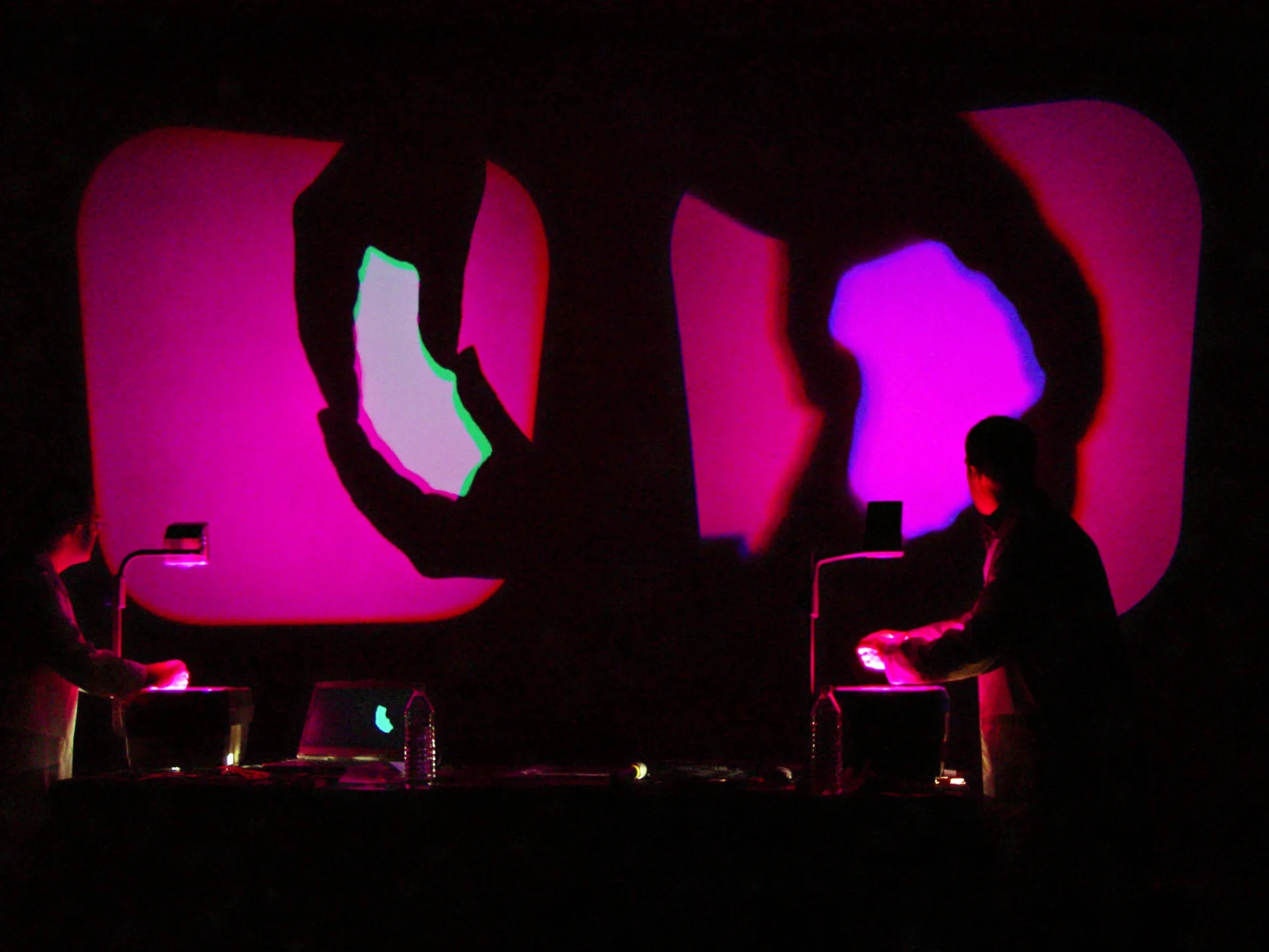
The Manual Input Sessions
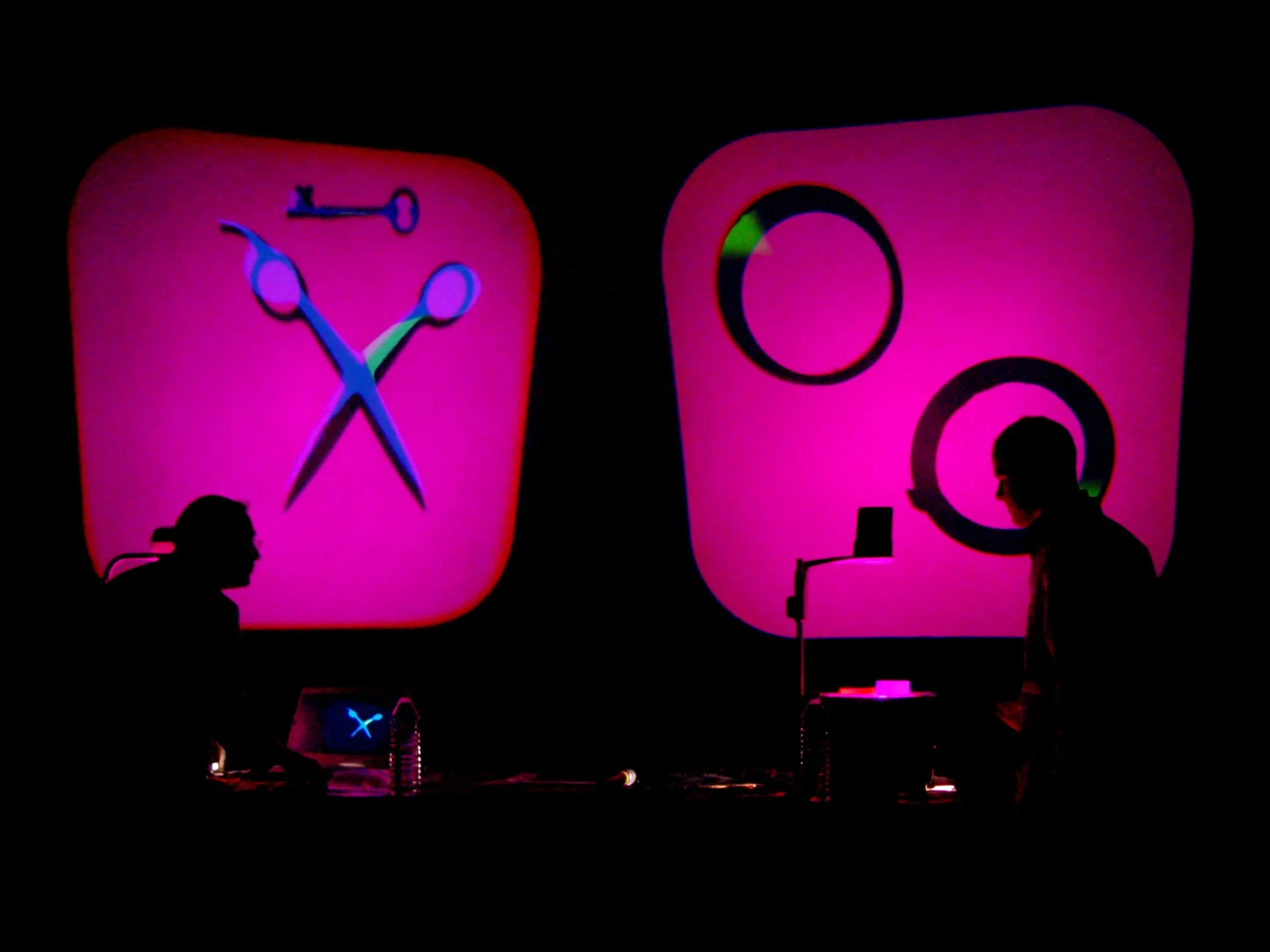
Hands, light, sound.
Hands and objects cross the glass of an overhead projector. A camera reads their silhouettes; custom software turns their shapes and movement into graphics and sound. Analog shadows and digital projections share the same surface.
TMEMA developed the work as a performance and as an interactive installation, The Manual Input Workstation.
Presented at the 2nd IMC Exposition, Chelsea Art Museum, April 14–23, 2005. Explore the IMC Expo archive and the artists’ project documentation.
Gesture becomes an instrument.
Zach Lieberman is an artist, researcher and educator who creates drawing tools, animations and interactive environments through code. His work turns the movements of participants into images and sound, inviting them to become performers.
He co-created openFrameworks, the open-source toolkit for creative coding, and co-founded the School for Poetic Computation. At the MIT Media Lab, he leads Future Sketches, exploring software as an artistic medium and the tools that make new forms of expression possible.
His collaboration with Golan Levin as TMEMA includes Messa di Voce and The Manual Input Sessions. Biography at MIT.