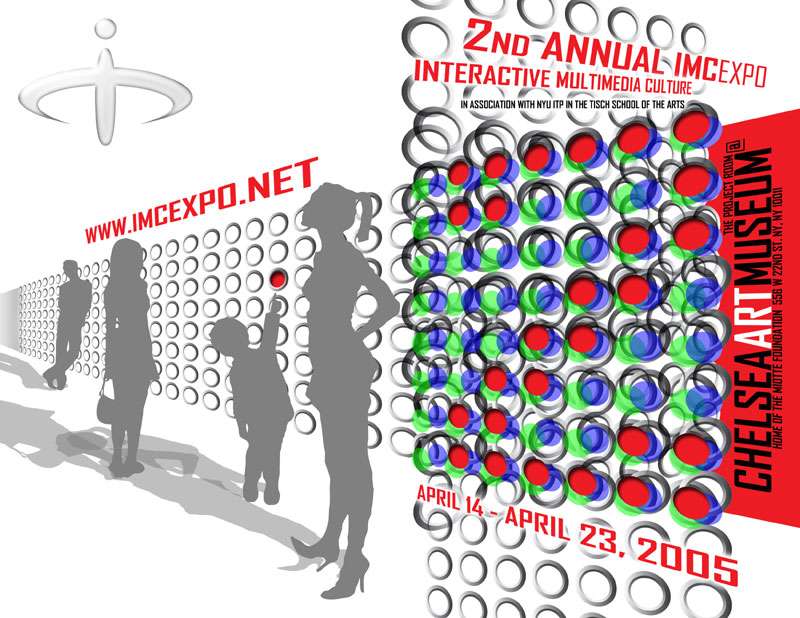
Chelsea Art Museum, New York City · April 14–23, 2005
An exhibition to enter, touch and change. The second Interactive Multimedia Culture Expo brought artists, engineers, designers and audiences together around responsive installations, virtual environments and new tools for making images and sound.
Produced by Studio IMC in association with NYU Tisch’s Interactive Telecommunications Program (ITP), the Expo took place in The Project Room at Chelsea Art Museum. Its exhibitions, demonstrations and conversations explored how interactive media could move between art, architecture, entertainment and everyday life.
Watch the Expo · Selected works · Artists · Program · Original documents
Inside the Expo
Selected works
CINE
Miro Kirov, Houston Riley and James Tunick; advisors Jean-Marc Gauthier and Frank Migliorelli.
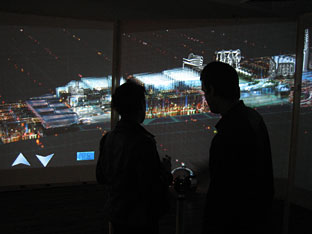
The Collaborative Immersive Network Environment turns physical gestures into movement through a virtual world. An infrared-sensing orb lets participants navigate a projected city and trigger sounds.
The Manual Input Sessions
TMEMA — Zach Lieberman and Golan Levin.
Hands, shadows and everyday objects become an audiovisual instrument. Computer vision reads silhouettes on an overhead projector and transforms their contours into animated shapes and sound. TMEMA appears in the original second-Expo artwork directory below; the work was also developed as the interactive Manual Input Workstation.
freeSTYLE
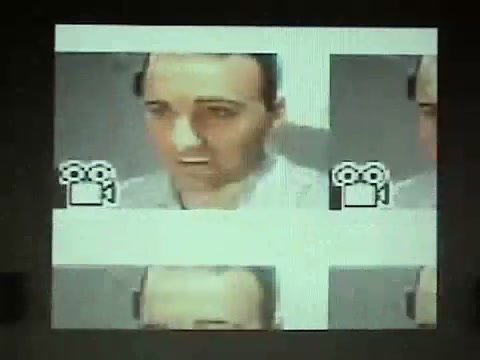
Visitors send text, pictures and video from their phones into a shared music-video composition. The screen becomes a collective work assembled from the audience’s contributions. The NY1 report demonstrates the process and interviews Karwas.
Chit Chat
Matthew Sallin.
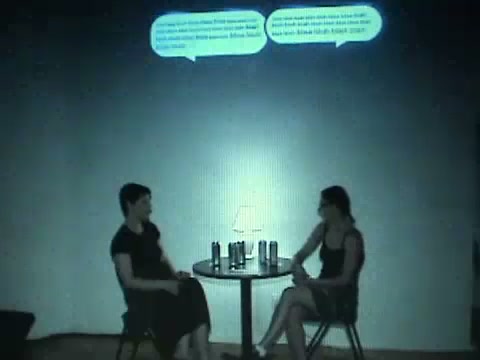
A conversation at a small table acquires a second life on the wall. Microphones feed the speakers’ voices into software, which projects comic-style speech bubbles above them. Changes in volume and pitch become changes in the size and emphasis of the text.
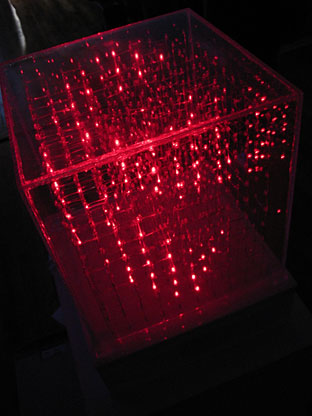
3D Display Cube
James Clar.
A spatial grid of illuminated LEDs gives moving images physical depth. The work explores a display that occupies a volume rather than a flat screen.
A toy piano for moving images
Doron Altaratz, also known as VJ Sputnik.
Altaratz adapted a toy piano into a controller for live video. Playing its keys produces changing visual sequences, bringing the gestures of a keyboard performance into moving-image composition.
Artists and collaborators
The surviving imcexpo.net directory records these artists and collaborative groups. The screenshot preserves part of the original scrolling list; it is not a complete exhibition checklist.
- Jamie Allen
- Doron Altaratz
- Mark Buccheri
- James Clar
- Ellen Hackl Fagan and Konrad Kaczmarek
- Jānis Garančs
- Jean-Marc Gauthier, Jeff Gray, Chi Fung, Kuan Huang, Yu-Chen Chiu, Noah Shibley and David Nolen
- Todd Holoubek, Daniel Shiffman, Dimitri Negroponte, Meghan Trainor and Jeff Gray
- Dana Karwas
- Dana Karwas and Gabe Winer
- Miro Kirov, Houston Riley and James Tunick
- Inhye Lee
- Zach Lieberman and Golan Levin (TMEMA)
- Marta Lwin, Ty Whitfield, Teresita Cochran and Ramakrishnan Subramanian
The museum announcement also names Kathleen Ruiz among the exhibiting artists. Matthew Sallin’s Chit Chat is documented in the NY1 report. Institutional exhibitors included NYU ITP, Rensselaer Polytechnic Institute, Livid Instruments and Virtools.
The 2005 program
- April 14: opening reception.
- April 15–16: keynote panels and educational symposia.
- April 19–23: exhibition continued.
Speakers and conversations
The museum and Project Room records list Michael Naimark, Paul D. Miller (DJ Spooky), Hank Shocklee, W. Bradford Paley, Judith Donath, Natalie Jeremijenko, R. Luke DuBois, Jean-Marc Gauthier, Kathleen Ruiz, Matthew Suttor, Clay Shirky, Derek Lomas, Craig Konyk and Miro Kirov.
Clay Shirky’s Expo talk, Folksonomies & Tags: The rise of user-developed classification, became part of his essay Ontology Is Overrated: Categories, Links, and Tags.
The Project Room’s April program also records Rhythm Science: Sampling in a Global Context: Music, Art, Technology and Copyright, moderated by DJ Spooky on April 15. Explore the preserved 2005 program.
Original documents and coverage
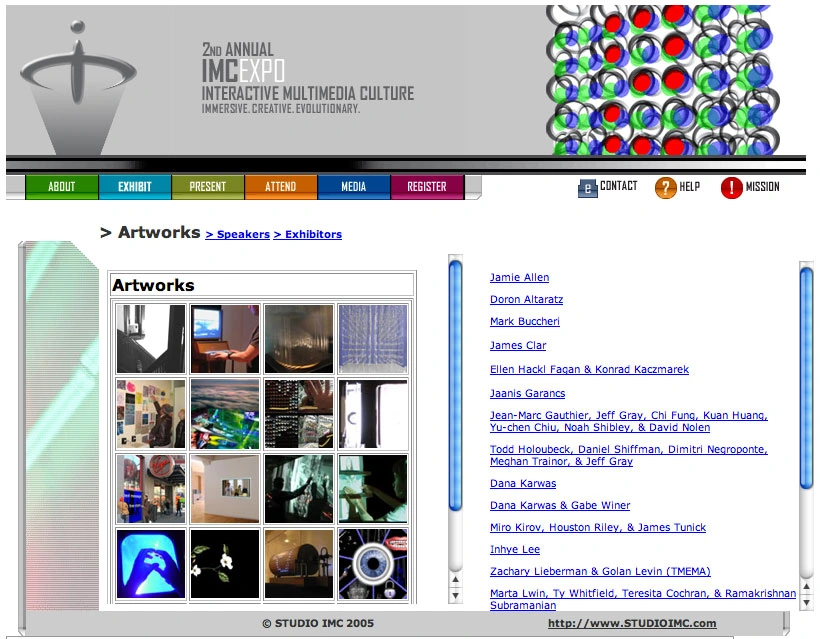
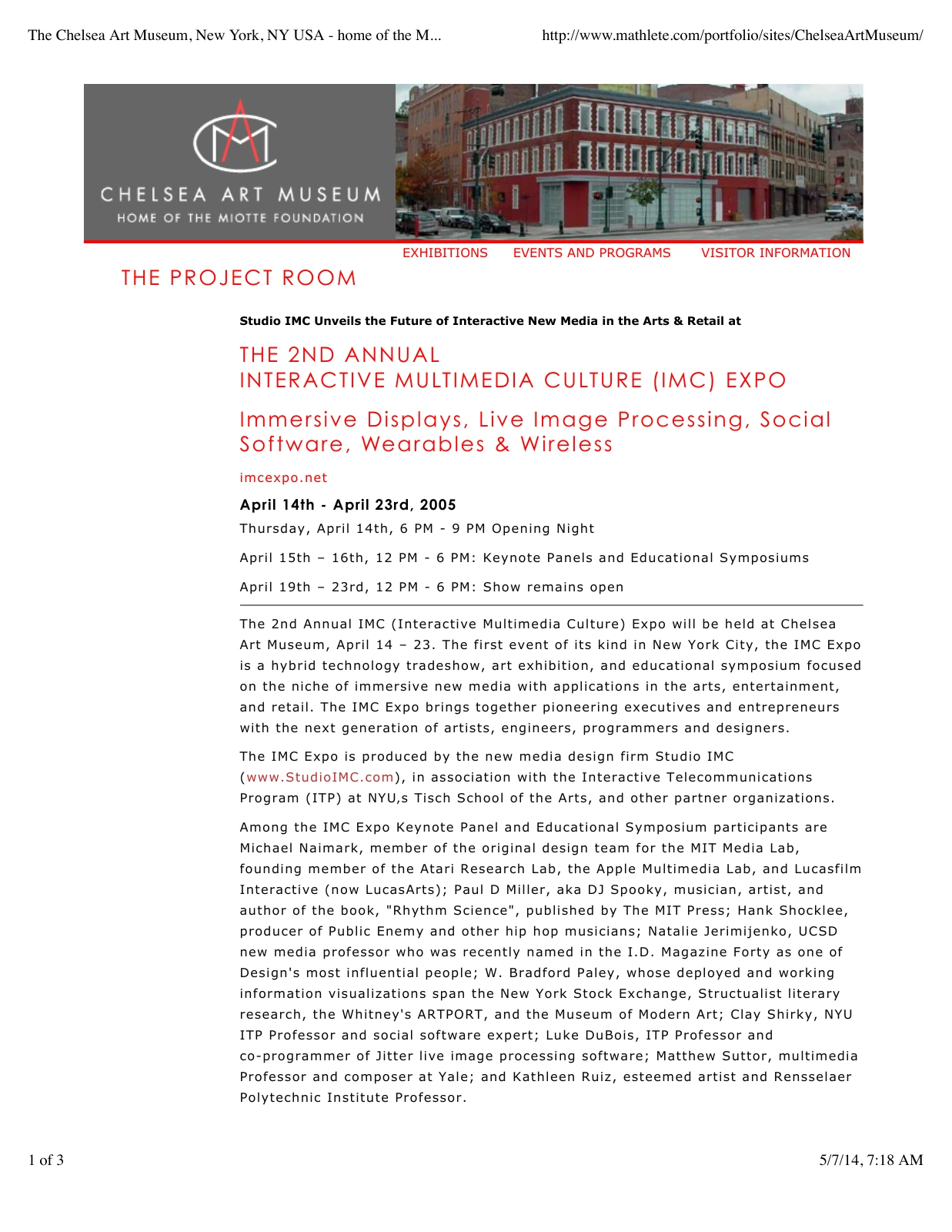
Documentation first appeared on imcexpo.net and was later preserved on theimclab.com. This page brings together the surviving website image, museum announcement, IMC photographs and contemporary coverage.
- Peter Kirn, CDM: IMC Expo 05 — Showcasing New Interactive Creations · May 10, 2005.
- The Project Room’s 2005 archive at Streaming Museum.
- NY1’s report from Chelsea Art Museum.
Continue to the 3rd IMC Exposition · All exhibitions and events.